12 May 2023
Case histories from below
It is all very slippery.
Janet Malcolm, ‘Trouble in the Archives’ (1983)
It feels a bit gauche or at least anachronistic – and certainly not very Marxist – to cite Jacques Derrida’s Archive Fever these days, a paper which he first delivered at the Freud Museum in London in 1994, but I found myself thinking about this passage recently so here it is:
To want to speak of psychoanalysis, to claim to do the history of psychoanalysis from a purely apsychoanalytical point of view, purified of all psychoanalysis, to the point of believing one could erase the traces of the Freudian impression, is like claiming the right to speak without knowing what one’s speaking about, without even wanting to hear anything about it.
The dream of exteriority and distance that Derrida identifies in the work of writer Yosef Yerushlami is, he claims, both impossible and illegitimate. In this passage, Derrida identifies a problem I’ve kept returning to in attempting to situate psychoanalytic case histories in history, which has involved paying attention to or amplifying things that psychoanalysts themselves sometimes downplay or ignore.
My title ‘Case histories from below’ is a silly pun. I wanted to ask: can ‘history from below’ be written using psychoanalytic case histories as its source?
‘The recovery of voices has been a central purpose of history from below from the very beginning’, writes Marcus Rediker in ‘The Poetics of History from Below’ (2010). There exists a large body of historicist often ‘revisionist’ work on psychoanalytic case histories that uses historical material and biographical detail to challenge Freud’s conclusions, as well as a major body of feminist scholarship that began to emerge in the 1970s that read case histories of Freud’s women patients for traces of those women’s voices or for evidence of Freud’s patriarchal assumptions. There’s certainly nothing novel about reading case histories in ways that conflict with the intentions of their authors, that try to find traces of counter-narratives or to amplify the muffled but audible voices they contain.
Psychoanalytic case histories have not, however, been a major focus of Marxist approaches to psychoanalysis and its history, perhaps due to assumptions about the class position of many psychoanalytic patients. I was struck reading Elizabeth Danto’s book on the free clinic movement how few case histories it cited, indicating that even in times and places when efforts have been made to make psychoanalysis available to people who could not afford high fees, that those patients’ experiences were not necessarily represented in publications based on clinical observations. It is also true that unlike understandings of sexuality and gender, class is not at the core of psychoanalytic theory. It’s not difficult to find accounts of Marxists who have engaged with psychoanalysis, they were there from the very beginning. It’s also possible to find accounts of historic attempts to offer low cost analysis or to find intellectual histories of Freudo-Marxism from a more theoretical perspective, but the questions I’ve been trying to think through are less about subject matter than they are about methodology.
How to take heed of the kinds of historical contexts or social issues psychoanalytic case histories sometimes skate over or downplay without resorting to crude and banal historicism, without seeming to imply that psychoanalysis doesn’t also change what it means to write history, what it means to think about temporality, the past, memory?
My first stop in trying to think about these questions was bourgeois Vienna. I had in mind a familiar dismissal levelled at psychoanalysis: that Freud’s supposedly universal observations about the human psyche were in fact based on a highly specific type of person: a bourgeois subject in early twentieth century Vienna.
The example I dug out to exemplify this position comes from the first volume of Ernst Bloch’s Principle of Hope (first published in German in 1954). Bloch writes that the ‘libidoman lives – together with his dreamed wish-fulfilments – in the bourgeois world a few decades before and a few decades after 1900…’.
The psychoanalytical doctor and above all his patient come from a middle class which until recently had to worry little about its stomach. When Freud's Vienna became less carefree though, there was a psychoanalytical advice bureau for attempted suicides… However, even in bourgeois déclassé Vienna, the notice hung on the wall of the [psychological advice] bureau: 'Economic and social questions cannot be treated here.' … This is the class-based limitation of psychoanalytical research into basic drives… in the proletariat neither cant, nor above all the libido take up so much room as Viennese psychoanalysis assumed ab origine. Hunger and troubles constrict libido in the lower class; there are fewer noble sufferings here, and they have a more tangible cause with a less sophisticated name… the fear of losing one's job is hardly a castration complex.
Bloch presents psychoanalytic concerns as rarefied and luxurious, unsuited to the experiences of people facing immediate and pressing material hardships.
Interested in thinking about this in relation to case histories, I read Mikkel Borch-Jacobsen’s Freud’s Patients first published in French in 2011 and translated into English in 2021, a recent example of a historicist approach that supplements psychoanalytic case histories with historical and biographical fact. It lacks the class analysis central Bloch’s criticisms but contains empirical details about the socioeconomic backgrounds of Freud’s patients.
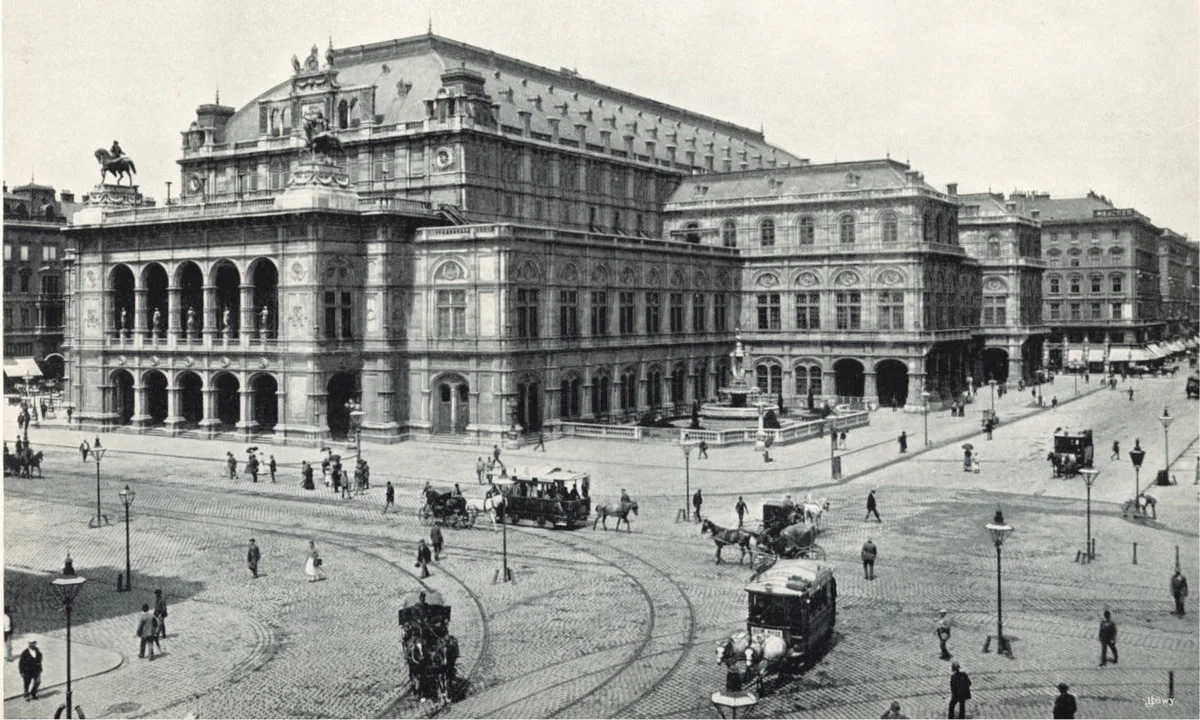
The book consists of 38 brief biographical sketches of Freud’s former patients and analysands, some well-known, others more obscure. Among those Borsch-Jacobsen discusses are a Baroness who hosted salons in the grandiose palace that she and her husband had built opposite the Vienna Opera and who, he informs us, occasionally consumed only champagne and caviar. Her Vienna was certainly not Red. He also devotes chapters to a bohemian baron, the richest woman in Central Europe whose husband had made his fortune as a watch seller, the daughter of the owner of a paper factory, a conductor at the Opera of the Imperial and Royal Court, as well as people from families of horse breeders, grain traders, and the daughter of the biggest oil importer in the Austro-Hungarian Empire. It is certainly possible to conjure up a vision of the kind of social milieu from which Freud’s patients mostly came from reading these brief sketches - a milieu which was soon to be violently disrupted by the Anschluss - but to what end?
Borch-Jacobsen’s motivation for assembling these succinct factual portraits is not part of a project that makes any claims about class. In his brief introduction he states his intention is merely to reveal the ‘real people’ behind Freud’s pseudonyms. He seems to take for granted that really real reality is easy to locate, that really real people are easy to distinguish from implicitly unreliable accounts of them. He offers no polemic about how the historical materials he’s assembled undermine Freud’s accounts but again and again his short narratives state that their treatments were unsuccessful or that patients’ own accounts contradicted Freud’s pronouncements about them. Borsch-Jacobsen describes his approach as follows:
No theory, no commentary: I have kept to the surface of the facts, documents and testimonies available, without speculating on the motivations, conscious or unconscious, of any of the people involved.
Affirming surfaces over depths in this manner seems like a pretty clear example of what Derrida called erasing the traces of the Freudian impression. Could a different approach to details about the lives of patients who appear in case histories be imagined?
In Freud for Historians (1985) Peter Gay attacked what he called the ‘historicist dispensation’ in sceptical historical writing on psychoanalysis, obsessed with locating the true truth lurking behind narratives presented in Freud’s writings. As he points out, all historians, whether they admit it or not, make assumptions about human nature, about will, agency and memory, but he argued that there are many things about psychoanalysis and its implications for understanding the past that are intolerable for many historians:
Unlike the psychoanalyst, the historian handles hard realities: food scarcities, urban agglomerations, technical innovations, strategic territories, religious institutions. When he [sic] studies conflicts in which mind has a share—class antagonisms or clashing interests— he finds them so palpable, so materialistic, as to be almost tangible. The Marxist historian, too, lives in a daylight, hard-edged world.
According to this prognosis, psychoanalysis is simply too weird, murky and unruly, too embroiled in the the primeval, too concerned with that which is irreducible to the material, too mired in the unknowable for most historians to tolerate. But can’t Marxist historians also engage with nocturnal worlds with soft edges? Don’t commodities in Marx’s account abound in ‘metaphysical subtleties and theological niceties’? Can’t a social historian, a historical materialist, treat dreams or fantasies as historical material? Don’t hungry people, proletarian people, also dream?
This is adapted from the opening to a talk I gave at the ICI Berlin last year:
https://www.ici-berlin.org/events/hannah-proctor/
I had intended to write something else entirely and would still like to try doing that. Since writing this I also began a collaboration with Eve Dickson and Akshi Singh looking at class dynamics in publications by British psychoanalysts, including Marion Milner and DW Winnicott, which we will hopefully continue too.