31 October 2025
Oases of actuality
The slightly disjointed and unresolved thoughts below are adapted from a paper I originally wrote for the conference Vive La Commune at the University of Nijmegen in January 2025.
The ‘commune form’
In Communal Luxury, her book on the political imaginary of the Paris Commune that was inspired by the ‘movements of the squares’ in 2010 and 2011, Kristin Ross cites a New York Times article that interviews an Occupy Oakland activist who gives their name as Louise Michel, a reference to the infamous ‘Red Virgin’ Paris Communard that the journalist failed to pick up on. Ross explicitly addresses her book to the possibility of political transformation in the present and is interested in moments like this when revolutionary history is brought to life in contemporary struggles. But her work also explores commemorative events in which the radical past is stripped of its original radicalism.

The problem or paradox of revolutionary commemoration animates her earlier book May ’68 and its Afterlives (2002), which engages critically with the official memorialization of May ’68 in France. In her most recent book, The Commune Form, she again discusses the commemorative events organized to mark the fiftieth anniversary of May ’68 in 2018 by Emanuel Macron, noting that ‘Like all state-sponsored commemorations, this one would do nothing more than summon forth the past in order to consecrate the present.’ Despite Paris being covered in images of the insurrections of that year they seemed drained of any insurrectionary potential. The memory of May ’68, she argues, was reignited not by official commemorations but by contemporary struggles outside the capital.
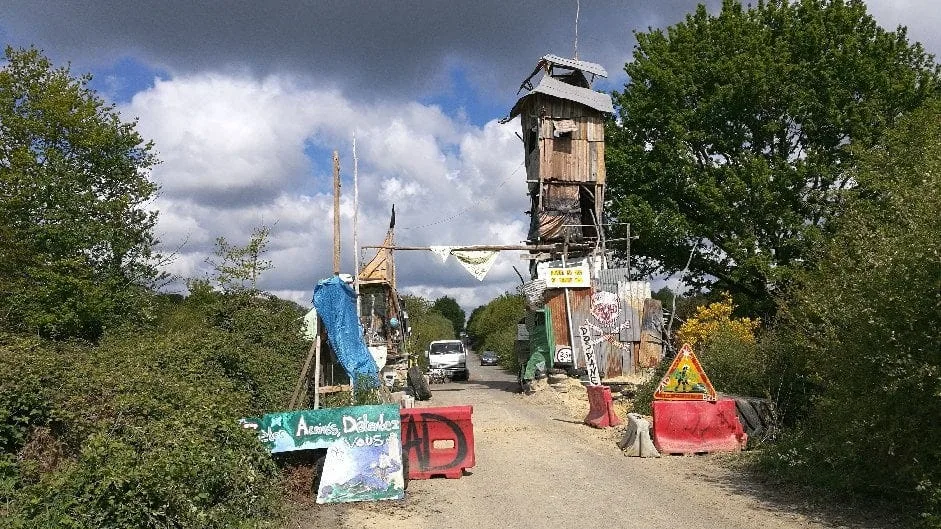
In January 2018 occupiers of land outside Nantes at Notre-Dame-des-Landes seeking to block the construction of an airport won their fight. The ZAD (Zone to Defend) that had sprung up at the site had been a long-running occupation, establishing a communal way of living. This political struggle reignited an interest, Ross observes, in the Larzac, ‘the long battle by sheep farmers… to hold on to grazing lands under threat of becoming an army training ground’ that began in the aftermath of 1968. ‘The Larzac found itself fulfilled anew in the present, prolonged, in a sense, in the form of the communal experiments at the ZAD.’ Alongside discussions of the Paris Commune of 1871 and the Nantes Commune of 1968, Ross’s short new book includes a discussion of more recent experiments in communal living including the ZAD.
She defines the ‘commune form’ as a practice that involves people ‘living differently and changing their circumstances by working within the conditions available in the present.’ Everyday life is organized differently within the commune with collectives working to meet their own needs outside the structures and systems of the state and, by practising subsistence, shielded from the pressures of capital accumulation, commodity production and consumption. Ross describes going to visit the ZAD at Notre-Dame-des-Landes in 2016, having been invited to give a talk about her book Communal Luxury. She describes encountering
a kind of oasis of human and nonhuman actuality, a place where haste was looked upon as a failure of tact, and tasks disclosed themselves in a succession according to a logic of what was in fact genuine need.
Although the person showing her around the ZAD discusses the difficult ‘Cycle of the Twelve’, a system introduced to mediate disputes and tensions, for the most part Ross’s account is glowingly romantic – she depicts a kind of parallel society in which time itself moves to a different rhythm.
Reading Ross’s description of the ZAD made me think of recent mainstream cinematic and literary representations of communal experiments in France, specifically Rachel Kushner’s 2024 novel Creation Lake [in the original paper I also discussed Mia Hansen-Løve’s 2016 film Things to Come but I’ve cut that bit]. For Ross, living within a commune is itself an art. But I began to think about the question of artistic form and aesthetics in relation to her discussion of the commune form and its meaning in the present. What form, what kind of aesthetic representation, would be adequate to a commune or to revolutionary histories? What does Kushner’s literary representation of communes in France reveal about our contemporary moment? To borrow Ross’s line about the official commemorations of May ’68, I want to ask whether Kushner’s novel does ‘nothing more than… consecrate the present’ or if its representation of an alternative mode of life calls into question the systems and structures of the dominant society?
Form and communes
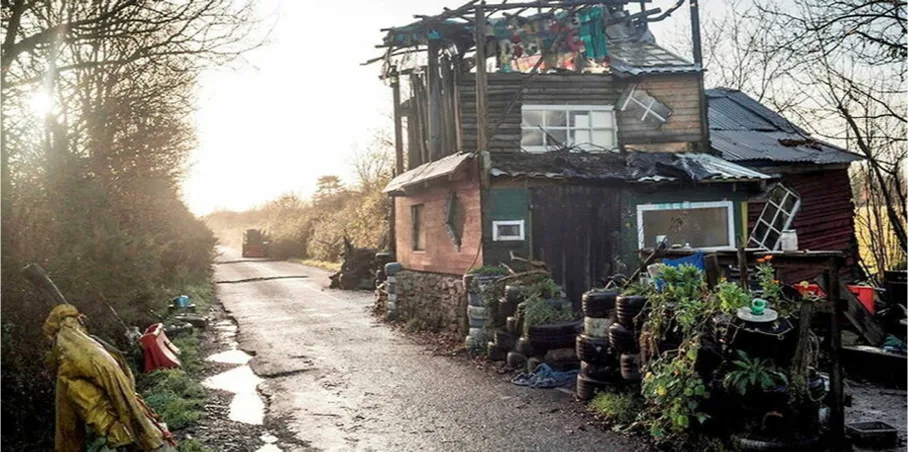
Creation Lake is narrated by Sadie Smith, a spy from California who abandoned a PhD in rhetoric at UC Berkeley to work as an agent provocateur for the FBI and is now working as a spy in the private sector in Europe having messed up an assignment with some activists in the US. Sadie’s first-person narration is interspersed with emails by an eccentric intellectual called Bruno who has developed a complex theory about Neanderthals. Sadie has been tasked with infiltrating the environmental commune Le Moulin in rural France with the aim of persuading the commune-dwellers to assassinate a far-right politician to prompt a police raid. Le Moulin has been set up to halt the building of a megabasin by a corporation that would take water from local farmers and destroy the local caves. In interviews Kushner has been explicit in citing the ZAD as one source of inspiration for the novel.
Kushner herself, as her non-fiction writing makes clear, is on the left and her interest in left-wing intellectual histories and histories of political struggle is also evident in her earlier novels. Her husband Jason Smith is a Marxist professor who has translated some works by the Invisible Committee (I once edited something he wrote about Paul Mattick Jr). Creation Lake mashes plenty of facts into its fictional world: details from the UK spy cops scandal, thinly veiled portraits of figures including Michel Houellebecq and the philosopher Jacques Camatte, Situationism, Lettrism, Tarnac, texts like the Invisible Committee’s 2007 tract The Coming Insurrection etc. Yet at the centre of the novel is the character of Sadie, a dispassionate and cynical narrator. As Ryan Ruby noted in a review in Book Forum: ‘Her “expensive” boob job is brought up often enough that the detail begs to be read as a symbol of the fundamental fakeness and hollowness of her character’ (though Kushner in interviews has protested that reviewers seem to accord disproportionate significance to Sadie’s breasts, which are mentioned far less than they imply). Despite the book’s explicitly radical content it is far from a polemical celebration of the commune form. Kushner has explicitly rejected any notion that novels should be vehicles for communicating political ideas or taking political positions but, as various critics have expressed frustration with the novel’s political obtuseness - as Ruby points out, insisting on the apolitical nature of the novel, especially given its overtly political content - is itself an ideological gesture of a sort.
Various reviewers of the book have expressed bewilderment and disappointment at the apparently cynicism of the book. Of course, a novel is not a manifesto, of course Kushner is not her narrator, but - some critics’ argument goes - it remains somewhat puzzling why a writer apparently sympathetic to the political convictions held by some of her characters seems so intent on dismissing the movements and communal experiments she describes. Ruby argues that Creation Lake, ‘not only formally mirrors the political impasses of its own time, it reproduces them,’ while Brandon Taylor’s take down in the London Review of Books ponders why Kushner even bothered to write the novel at all. According to Ruby, ‘Sometimes the more complexly ironic a novel is, the more usefully it expresses the ruling ideologies and political contradictions of its era’. But to what use can expressing those ideologies and contradictions be put? I think there’s something more complicated than cynicism going on in Creation Lake. Unlike, say, Doris Lessing’s The Good Terrorist whose portrait of hapless and trivial revolutionaries does fairly straightforwardly seem to reflect Lessing’s derision for a younger generation of militant mostly middle class left-wing activists in London.
Given Kushner’s avowed political interests, it doesn’t quite make sense to me to treat her text (according to the Jamesonian method) as an expression of a particular ‘political unconscious’ or to read it as a kind of allegory so I’m going to try a different approach: to think about the novel via Jameson’s and Ross’s writings on detective fiction (Jameson was Ross’s PhD supervisor and was also a fan of Kushner’s work so he seemed like an obvious thinker to reach for here).
Detecting the past
The detective for Raymond Chandler, according to Jameson’s analysis, performs the function of ‘knowledge rather than lived experience’: “The detective’s journey is episodic because of the fragmentary, atomistic nature of the society he moves through.’
Since there is no longer any privileged experience in which the whole of the social structure can be grasped, a figure must be invented who can be superimposed on the society as a whole, whose routine and life-pattern serve somehow to tie its separate and isolated parts together.
In the essays ‘Watching the Detectives’ and ‘Parisian Noir’, both included in the recent collection The Politics and Poetics of Everyday Life, Ross discusses the peculiar genre of detective fiction produced by many former militant ‘68ers in France. Unlike the US detective fiction analyzed by Fredric Jameson in his book on Chandler Ross claims that,
in France, where the detective genre has emerged as one of the privileged venues for social and political critique, the narrative mechanisms and the figure of the detective have been substantially altered and put in the service of a new critical project: that of historicizing the recent past.
For Ross, the French detective gains insights into French society via explorations in marginal urban spaces of the city. She suggests that the detective be understood as ‘a kind of geographer engaged in the mapping of social space’ but unlike Chandler’s Marlow these detectives were not only investigating space, they were also investigating time. According to Ross, the French detective novel does something distinctive: it mediatates on the historical past in order to question society in the present – ‘deep history comes to light in the course of the investigation’. If Raymond Chandler only interpreted the world, these writers she suggests, also sought to change it. ‘History, then, is made visible, not with the purpose of giving the French images of their past, but rather to defamiliarize and restructure their experience of their own present.’ Far from mirroring or reproducing the political impasses of the present (which is what Ruby suggests Kushner’s novel does) this fiction seeks to break through them.
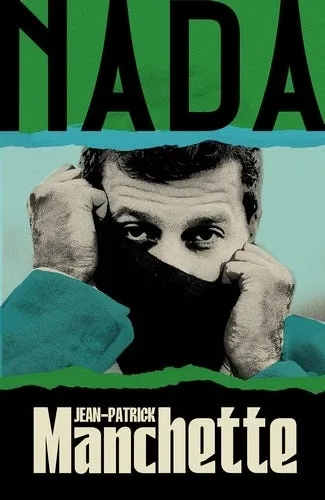
Though Ross only mentions him in a footnote and spends longer discussing other authors, among the clutch of French former militants turned detective novelists is Jean-Patrick Manchette who Kushner has cited as an influence on Creation Lake. Sadie the private spy is not exactly a detective but she shares many of the same qualities: disguising her identity, slipping unobtrusively into unfamiliar worlds, crossing class boundaries, perceiving scenes from an outsiders’ perspective, looking for information, talking to strangers. Could Ross’s analysis of French detective fiction be brought to bear on Kushner’s novel? Or, given that both the author and protagonist of the novel are from the US, is it closer to the novels of Raymond Chandler analyzed by Jameson?
Symptoms of defeat
In a recent interview Kushner was asked about how she responded to the death of Jameson (who was a fan of her work). She reveals that she sent him a copy of Creation Lake and received a letter in response from which she quotes:
I’m fascinated by the oblique perspective that you bring to all this, and the atmosphere of treason and betrayal that floats over it. That would perhaps be a whole study in itself, but I would be curious to see what my student and friend Kristin Ross thinks of it, inasmuch as she has been so closely associated with the various ZADs in Notre-Dame-des-Landes.
I am also curious about this and intrigued by the obliqueness of Jameson’s comment about obliqueness here. What did he really make of this? What would a study of the novel’s treatment of treason and betrayal say? Does the obliqueness achieve the defamiliarization that Ross associates with French detective fiction or does it merely mirror the political impasses and confusions of the contemporary moment? Can the-novel-as-mirror still encourage its readers to smash the glass? The differences between Ross’s The Commune Form (which is polemical and wears its politics on its sleeve) and Kushner’s Creation Lake seem far more striking to me than the similarities but is that just a question of genre?
I would venture that the differences also maybe have something to do with their different relationships to the legacies of radical history. Whereas for Ross the Larzac and rebellions in the countryside represent the real living legacies of 1968 that continue to have meaning and vibrancy in the present, for Kushner’s narrator Sadie, the commune Le Moulin is introduced as a symptom of defeat:
none of these eruptions had resulted in the overthrow of capitalism in any of the advanced industrial nations of the entire European continent—not a single one. In the wake of the colossal failure of leftist revolt, many radicals went to the countryside.
Her Communards are disaffected transplants from Paris who remain cut off from their local communities and ignorant of how to successfully build a life outside of the city: ‘Most of those who came grew disillusioned by the challenges of farming, the isolation of the region, the closed-off community of locals.’ Again this is very different from Ross’s characterization of the people she encountered at the ZAD who she describes as coming from a range of class backgrounds and generations. She also emphasizes the forms of connection between the commune and the surrounding communities and the forging of solidarity across difference.
When people of starkly different backgrounds and beliefs come together pragmatically on an everyday basis to perform the tasks and devise the ever-shifting agendas of a territorial occupation, something like a polemical political community is created.
When Sadie first arrives at Le Moulin it is not a utopia of plenitude and communal harmony that she encounters but a dysfunctional community in an inhospitable landscape inhabited by people from an urban political clique who lack the skills to survive there successfully:
I took a road that bordered Le Moulin and saw the commune’s sun-singed squashes, their scraggly lettuces. Their land did not border a creek or river tributary and would be difficult to irrigate. The soil here was rocky. Only activists from Paris would take up subsistence farming in a place like this.
Women do most of the domestic work at Le Moulin, further emphasizing its failure to overcome the systems and structures of the society beyond. (Ross’s discussion of ‘The Cycle of the Twelve’ introduced at the ZAD acknowledges the persistence of such difficulties but - with her typically optimistic half-full glass - she emphasizes the method for resolving issues rather than dwelling on the issues themselves).

History in Kushner’s novel appears in various guises. It appears via the prehistoric theories of the philosopher character Bruno Lacombe who has retreated from politics to the world of Neanderthals and become preoccupied with the darkness of caves. The book itself is set in the recent past – in 2012 – so Sadie’s observations of the late capitalist present are already in a sense historical. And it also appears in relation to many of the characters’ relationships to their own earlier experiences, particularly in relation to 1968. Sadie is critical of the people she meets for having a romantic and sentimental attachment to the past, to the France of Godard and Debord. Godard’s films were already a cringey affectation in the 1960s, she claims, while Debord was able to reject work because of his family wealth. Debord, she notes, ‘had not changed the world. Instead, he had merely become famous.’ Ross is on the side of the romantics but does that mean she sometimes fails to fully confront the limitations of the past and the impasses of the present?
At the end of Kushner’s novel Sadie disappears and stops being a spy. Is there something obliquely hopeful in this or am I just naively trying to find some political transparency where there is none?
Barely audible messages
Jameson’s 2004 essay ‘The Politics of Utopia’ concludes by suggesting that although utopias by definition don’t exist, they should not be viewed as strictly fictional: ‘Utopias in fact come to us as barely audible messages from a future that may never come into being.’ Though he considers how utopian imaginings reflect the anxieties and ideologies of the present, he insists that by envisioning a different world they can also smash through the mirror’s glass. A dream can help transform reality but the transformation won’t happen automatically.
Jameson invokes Marge Piercy’s feminist sci-fi novel Woman on the Edge of Time (1976) in which people from a more equitable future travel to the present to enlist its inhabitants in a war for their survival. By moving back and forth between future and present, Piercy’s narrative is not a hermetic vision of a different society but stages an encounter between possibility and actuality. Witnessing an alternative reality motivates Piercy’s protagonist to fight against her treatment in an oppressive psychiatric ward in contemporary New York, striving to bring aspects of the better world she has glimpsed into being. It isn’t a romantic or sentimental form of utopianism but one that reckons with the lasting scars of the dystopian present, the kinds of scars Ross sometimes seems too much of a political optimist to dwell on. Creation Lake may describe an alternative form of community, understood by some as an attempt to instantiate a utopian mode of living, but it is far from a utopian novel and is much more interested in the past than the future.
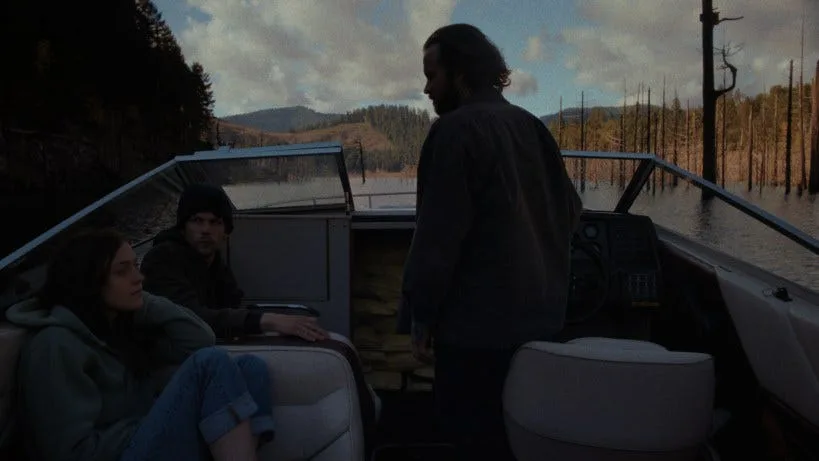
Comparing The Commune Form with Creation Lake is a little unfair as Ross’s book is not an artwork and so shouldn’t be judged according to the same criteria, but reading the two books side by side reminded me of the contrast between two very different films about eco-terrorism (which in turn reminded me of early twentieth century debates about aesthetics and politics): Daniel Goldhaber’s Andreas Malm inspired How to Blow Up a Pipeline and Kelly Reichardt’s Night Moves (2013). The former film is politically didactic and while it may be refreshing to see a mainstream thriller presenting direct action so sympathetically, it is ultimately trivial and aesthetically conventional. Reichardt’s Night Moves, by contrast, is unspectacular, gloomy and tense. It ends in quiet disaster. It is closer to Piercy’s novel Vida, which follows the often unspectacular life of a former militant underground than it is to Woman on the Edge of Time. The politically committed protagonists of Reichardt’s film are not vindicated by their actions but end up wrecked by the experience and wracked by guilt. But the film has none of the disdain towards them that animates Lessing’s Good Terrorist. As Jameson wrote of Kushner’s novel, Night Moves has an ‘oblique perspective… [an] atmosphere of treason and betrayal… floats over it’. Leave transparency to the manifesto writers; strain instead to hear an artwork’s barely audible messages.